
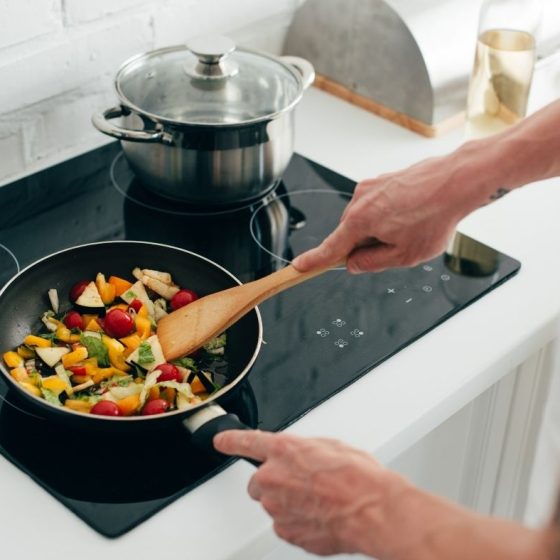
Let’s face it: whether you’re sautéing mushrooms, burning toast (hi, it’s me), or whipping up a green smoothie that smells suspiciously like pond water—how you cook matters. And no, this isn’t a debate about technique (though I’ll forever stand by the fact that “simmer” is a suggestion, not a rule).
This is about your cooktop.
Gas or electric? Flame or frequency? Fumes or EMFs?
If you’re trying to live that conscious, low-tox, crunchy-but-not-crazy lifestyle, it’s time we unpack what’s really happening when you fire up the stove.
Because spoiler alert: it’s not just your onions releasing gases.
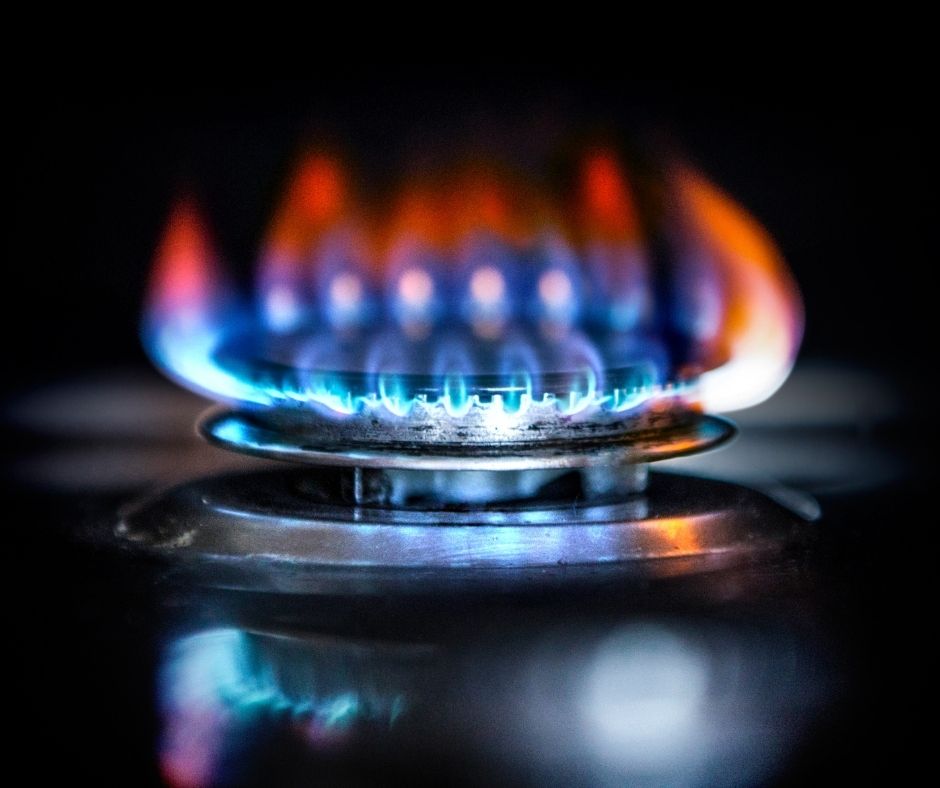
The Gas Stove Glow-Up (or… Blow-Up?)
Let’s start with the OG. The gas cooktop. It’s the darling of chefs, the aesthetic of kitchen renos, and the villain in a few recent headlines.
Gas gives you instant heat, precise control, and that primal “I’m cooking with fire” satisfaction. It also gives you:
- Carbon monoxide
- Nitrogen dioxide
- Formaldehyde
- A subtle sense of doom
A 2023 study found that using a gas stove for just one hour can spike indoor nitrogen dioxide levels beyond what’s considered safe for outdoor air by the WHO. So if you’re cooking in a poorly ventilated space (hi again, most of us), you’re basically marinating your family in low-key air pollution every time you boil spaghetti.
“But I open a window!” you cry, while stirring your sauce and casually dodging invisible fumes.
That’s cute. Unfortunately, ventilation only helps a bit, and range hoods aren’t all created equal. Unless you’re running a commercial-grade system, chances are, those gas by products are sticking around longer than your last dinner guest.
Okay, But What About Electric? It’s Just… Plug and Play, Right?
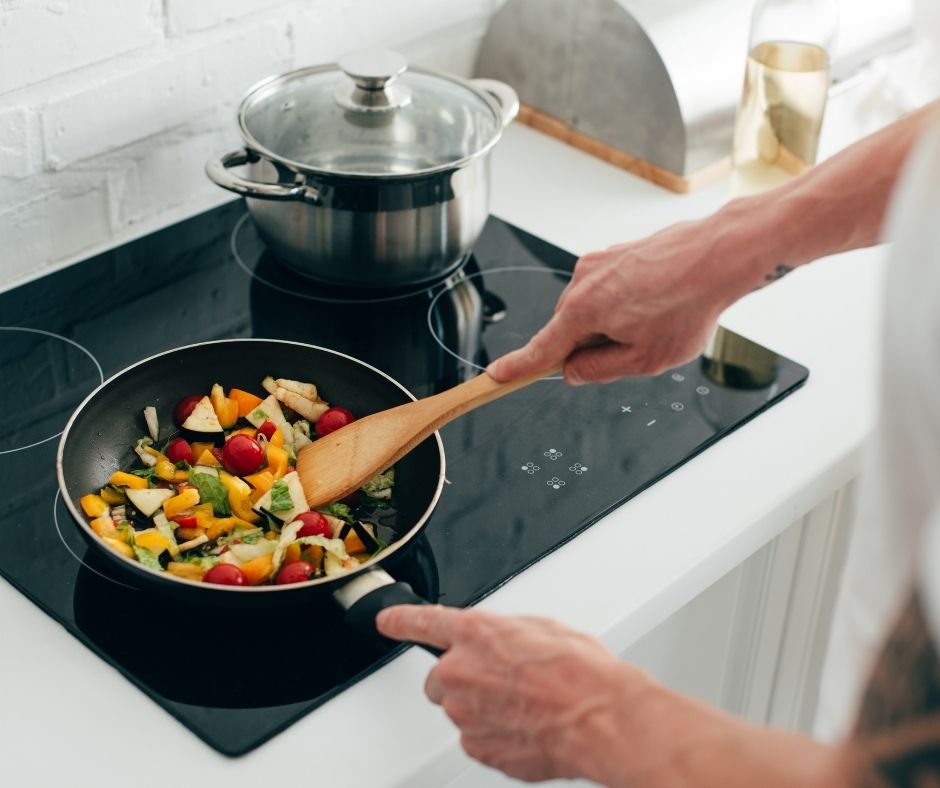
Electric cooktops—especially the sleek, sexy induction ones—have become the poster child for modern conscious kitchens. No open flame, no indoor pollutants, no accidentally lighting your tea towel on fire. Win!
But of course, there’s a catch. And it rhymes with “G-M-F”.
Actually, it doesn’t. It’s EMF—Electromagnetic Fields.
Electric and induction stoves emit low-frequency EMFs that can raise eyebrows in the crunchy community. Are EMFs the new gluten? Maybe. Are they completely harmless? Also maybe. Are they worth understanding before you replace your flame with a frequency field? Absolutely.
Wait—What Even Are EMFs and Should I Be Wearing a Tin Foil Hat While Boiling Pasta?
EMFs are invisible fields of energy created by electric currents. Your phone, your microwave, your WiFi router, your smartwatch, and yes, your induction cooktop—all emit them. There are two types:
- Ionising EMFs (from X-rays and UV rays = dangerous at high exposure)
- Non-ionising EMFs (from electronics = possibly irritating, rarely regulated)
Now, induction cooktops work by creating a magnetic field between the stove and your pot. If you’re not wearing the pan (please don’t), the field is only supposed to activate where it meets the metal. But studies have shown that some leakage can still occur, especially when you lean in real close to check if your pancakes are burning.
Fun fact: Standing just 30cm back reduces your EMF exposure by over 90%. So, maybe stop face-hugging the saucepan, chef.
Fumes vs Fields: What’s Worse?
Let’s break it down in a totally biased-but-honest low-tox showdown.
|
Category |
Gas Cooktop |
Electric/Induction Cooktop |
|
Air Quality |
Releases NO₂, CO, and particulates |
No fumes, indoor air remains clean |
|
Burn Risk |
Open flame = higher risk |
Cooktop stays cooler (especially induction) |
|
Control |
Instant flame control |
Slight lag, but induction is fast |
|
EMF Exposure |
Minimal |
Yes, especially close-up |
|
Aesthetic |
Rustic Pinterest vibes |
Minimalist TikTok kitchen goals |
|
Low-Tox Factor |
Due to combustion |
Cleaner (but monitor EMF exposure) |
The Verdict: It’s Not One or the Other (But It Kind of Is)
Here’s the deal: gas is bad for your air, electric is questionable for your aura.
If you have asthma in the house, live in a small space, or are in your “detox the home” era, gas might be a deal breaker. The long-term impact of constant low-level air pollution isn’t something we can blissfully ignore—especially when it comes to kids, who breathe faster and closer to stovetop height.
Electric, on the other hand, gives you clean indoor air but comes with EMFs, which—let’s be honest—are still being debated like a Bachelor finale.
If you go electric or induction:
- Stand back while cooking
- Use a wooden spoon, not your forehead, to check heat
- Prioritise brands with low-EMF leakage ratings
- Turn it off at the wall when not in use
But I Rent and My Landlord Doesn’t Believe in Ventilation or Logic…
If you’re stuck with gas, don’t panic. Here’s your low-tox survival kit:
- Always use a rangehood or open windows
- Simmer with lids on to reduce fumes
- Invest in an air purifier with a VOC filter
- Don’t let toddlers camp on the kitchen floor during meal prep
- Cook in bulk to minimise daily exposure
And maybe—just maybe—leave the Sunday roast for your friend with an induction and a HEPA filter.

And Don’t Forget the Cookware Plot Twist
Another wrinkle? Your cookware matters too.
Induction needs magnetic-bottom pans, which can include stainless steel or cast iron. Aluminium and copper pans? They won’t work. But that might be a good thing, since aluminium leaching is another whole rabbit hole (spoiler: not great for your brain).
Gas stoves are less picky, but they do expose your cookware to soot and higher temps, which can degrade non-stick surfaces faster—and release even more questionable compounds into your stir-fry.
So yes, the plot thickens… like a stew in a leaky enamel pot.
The Conscious Cart POV: Be Informed, Not Terrified
At The Conscious Cart, we’re not here to fear-monger. We’re here to empower your choices, one EMF and gas fume at a time.
We know the goal isn’t perfection—it’s awareness. Whether you’re deep in your non-toxic kitchen transformation or still Googling “What is VOC?”, every step you take to understand what’s in your home environment counts.
There’s no shame in doing what works for your family, your budget, and your rental agreement. Just like there’s no shame in using a microwave (more on that soon…) or realising that yes, the “clean kitchen aesthetic” influencers all seem to have invisible rangehoods and white marble that never stains. Lies!
Final Takeaway (Before You Start Kitchen Renovation Planning on Pinterest)
If you’re building, renovating, or switching up your stovetop:
🥇 Induction wins for low-tox indoor air
🥈 Electric is a solid in-between
🥉 Gas… still looks pretty, but maybe crack a window (or five)
Most importantly: stay curious. The more you know, the more power you have to protect your space—without losing your mind (or your sourdough starter).
You don’t need a perfect kitchen. Just a conscious one.
And if all else fails—slow cook it, raw food it, or order Uber Eats from that place with compostable cutlery. No judgement.
